

Satset189 game mechanics have become more than a set of rules behind a screen; they are the structure that shapes pace, challenge, reward, and player confidence. This article explores how satset189 games can evolve from simple interactions into more layered experiences through better onboarding, clearer feedback, balanced progression, mobile-first design, and responsible play features. The goal is to help readers understand what makes modern game mechanics feel smoother, fairer, and more engaging without relying on hype or unnecessary complexity. The actual Interesting Info about satset189.
What makes game mechanics evolve over time?
Game mechanics evolve when player expectations, platform capabilities, design goals, and usability standards change. A mechanic that once felt fresh can become frustrating if it is slow, confusing, or poorly explained, while a simple feature can become more valuable when it is supported by clearer feedback and better pacing. In the context of satset189 games, evolution is best understood as a shift from basic interaction toward more intentional design: every tap, choice, animation, reward, and pause should help the player understand what is happening and why it matters.
The most important driver is the relationship between challenge and clarity. Players usually enjoy challenge when they understand the rules and feel that outcomes follow a recognizable logic. They become less patient when a game hides essential information, overwhelms them with menus, or rewards them in ways that feel random without context. Good mechanics do not remove uncertainty, but they make the experience readable.
Another major driver is convenience. Modern players often move between devices, sessions, and attention levels. They may play briefly during a break, return later, or explore several modes before choosing a favorite. Mechanics that support this behavior tend to feel more modern because they respect time and reduce friction.
That is why the evolution of game mechanics is not only about adding features. It is also about removing unnecessary steps, simplifying decisions, and making the core loop easier to enjoy. A better mechanic is not always bigger. Often, it is cleaner, faster, and more transparent.
From basic rules to richer player experiences
Early digital game experiences often depended on straightforward loops: start, act, receive an outcome, and repeat. That structure can still be effective because it is easy to understand. However, as players become more familiar with interactive entertainment, they often expect additional layers that make repeated sessions feel more meaningful.
For satset189 games, richer mechanics may include clearer mode selection, more visible progress, better session flow, and feedback that helps players understand the effects of their actions. These changes do not need to make the game complicated. They simply give the player more context and a stronger sense of control.
A basic rule set answers the question, “What can I do?” A mature mechanic also answers, “What should I notice?” and “What can I improve?” That difference is important because engagement often depends on whether the player can connect action to outcome. When the interface explains status, timing, options, and consequences well, the player spends less energy guessing and more energy participating.
The evolution from simple rules to richer experiences usually happens in layers:
- Core interaction: The main action must be easy to understand and repeat.
- Feedback: The game should clearly show what happened after each action.
- Progression: Players need a sense of movement, even if sessions are short.
- Choice: Additional options should add meaning, not confusion.
- Recovery: The experience should make it easy to pause, restart, learn, or adjust.
- Trust signals: Rules, limits, and outcomes should be presented in a way that feels transparent.
When these layers work together, the game feels more complete. Players do not need to study a manual before beginning, but they can still discover depth as they continue.
The core loop is still the foundation
Every engaging game depends on a core loop. This is the repeated cycle of action, response, decision, and continuation that keeps a player involved. If the loop is weak, extra features rarely solve the problem. If the loop is strong, even a simple game can feel satisfying.
In satset189 games, a strong core loop should make the next action obvious without making the experience feel automatic. The player should know where to look, what input is expected, and what result occurred. At the same time, there should be enough variation or tension to prevent the loop from feeling flat.
A well-designed loop usually includes three qualities. First, it is readable. The player can quickly understand the state of the game. Second, it is responsive. Actions produce timely feedback, whether through motion, sound, text, progress indicators, or visual changes. Third, it is purposeful. The player feels that each action belongs to a larger rhythm rather than existing as an isolated click.
A common mistake in evolving mechanics is to add too much around the loop while neglecting the loop itself. Menus, bonuses, achievements, and visual effects can support engagement, but they should not interrupt the main experience too often. If players spend more time navigating than playing, the design feels heavy.
A practical way to evaluate the core loop is to ask:
- Can a new player understand the main action within a few moments?
- Does the game show clear feedback after that action?
- Is the next possible action easy to identify?
- Does the loop create enough interest to continue?
- Are interruptions limited and useful?
When the answer to these questions is yes, the foundation is strong enough for more advanced mechanics.
Why do feedback systems matter so much?
Feedback systems matter because they turn hidden game logic into visible player understanding. Without feedback, a player may complete an action but still feel uncertain about whether it worked, what changed, or what should happen next. Strong feedback in satset189 games can make the experience feel smoother, more trustworthy, and easier to learn.
Feedback can be visual, audio-based, text-based, or structural. A button changing state after a tap is feedback. A progress bar moving forward is feedback. A short message explaining an outcome is feedback. Even the pacing between screens communicates something about how the game works.
The best feedback is immediate enough to feel responsive but not so aggressive that it becomes distracting. If every small action triggers a large animation, the game may feel noisy. If important events receive only subtle signals, players may miss them. The balance depends on what the player needs to notice.
Feedback also helps reduce frustration. When players understand why something happened, they are more likely to accept the result and continue. When they do not understand, they may assume the system is unclear or unfair. This is especially important in games where outcomes include uncertainty, timed choices, resource use, or progression.
Useful feedback often includes:
- Confirmation: Shows that an input was received.
- Outcome explanation: Makes the result clear without overloading the screen.
- Progress indication: Helps the player see movement toward a goal or milestone.
- Error guidance: Explains what went wrong and how to fix it.
- State awareness: Shows current status, available options, or limits.
- Transition cues: Helps the player understand when one phase ends and another begins.
Good feedback is not decoration. It is part of the mechanic itself. It teaches, reassures, and keeps the experience moving.
Progression changed how players understand value
Progression gives players a reason to see a session as part of a larger experience. It can be as simple as unlocking a new mode, reaching a milestone, completing a challenge, or becoming more familiar with the rules. What matters is that the player sees a path rather than a disconnected series of moments.
In modern game design, progression is often used to create structure. It helps players decide what to do next and gives them a sense of achievement. In satset189 games, progression can make the experience feel more approachable by introducing features gradually instead of presenting everything at once.
However, progression must be handled carefully. If it becomes too slow, players may feel blocked. If it becomes too fast, milestones may lose meaning. If it is too complex, players may struggle to understand what they have earned or unlocked. The best progression systems feel natural because they match the pace of learning.
There are several types of progression that can shape player experience:
- Skill progression: Players become better through familiarity, timing, pattern recognition, or decision-making.
- Content progression: New modes, themes, challenges, or features become available over time.
- Goal progression: Players complete tasks, milestones, or session objectives.
- Knowledge progression: Players come to understand deeper strategies, rules, or patterns as they progress.
- Personal progression: Players adjust preferences, build routines, or identify favorite game types.
The strongest systems often combine more than one type. For example, a player might first learn the basics, then discover optional features, then choose a preferred way to play. This creates a journey without forcing every player into the same pattern.
Onboarding has become part of the mechanic
Onboarding used to be treated as a separate introduction, but modern design treats it as part of the game experience. A player’s first few minutes can determine whether the mechanics feel inviting or confusing. If the introduction is too long, it slows momentum. If it is too thin, players may miss key information.
Effective onboarding introduces the game by doing, not by overwhelming. It gives players enough guidance to take the next step and then lets feedback reinforce the lesson. This approach works especially well for satset189 games because players may arrive with different levels of experience.
A strong onboarding flow usually avoids long explanations before the player has context. Instead, it reveals information when it becomes useful. For example, the interface might explain a feature when the player first encounters it, highlight a key control during the first session, or provide optional help for those who want more detail.
The best onboarding experiences often include:
- A clear starting point that reduces hesitation.
- Simple language that avoids unnecessary jargon.
- Early feedback that confirms the player is on the right track.
- Optional help that does not interrupt confident users.
- Gradual feature introduction rather than a full menu dump.
- Easy return paths if the player makes a mistake or changes their mind.
Onboarding should not feel like a barrier before the game begins. It should feel like the first part of play.
Choice architecture makes complexity manageable
Choice is valuable when it gives players meaningful control. It becomes a problem when every screen asks for a decision before the player understands the options. As game mechanics evolve, one of the biggest challenges is giving players enough choice without creating decision fatigue.
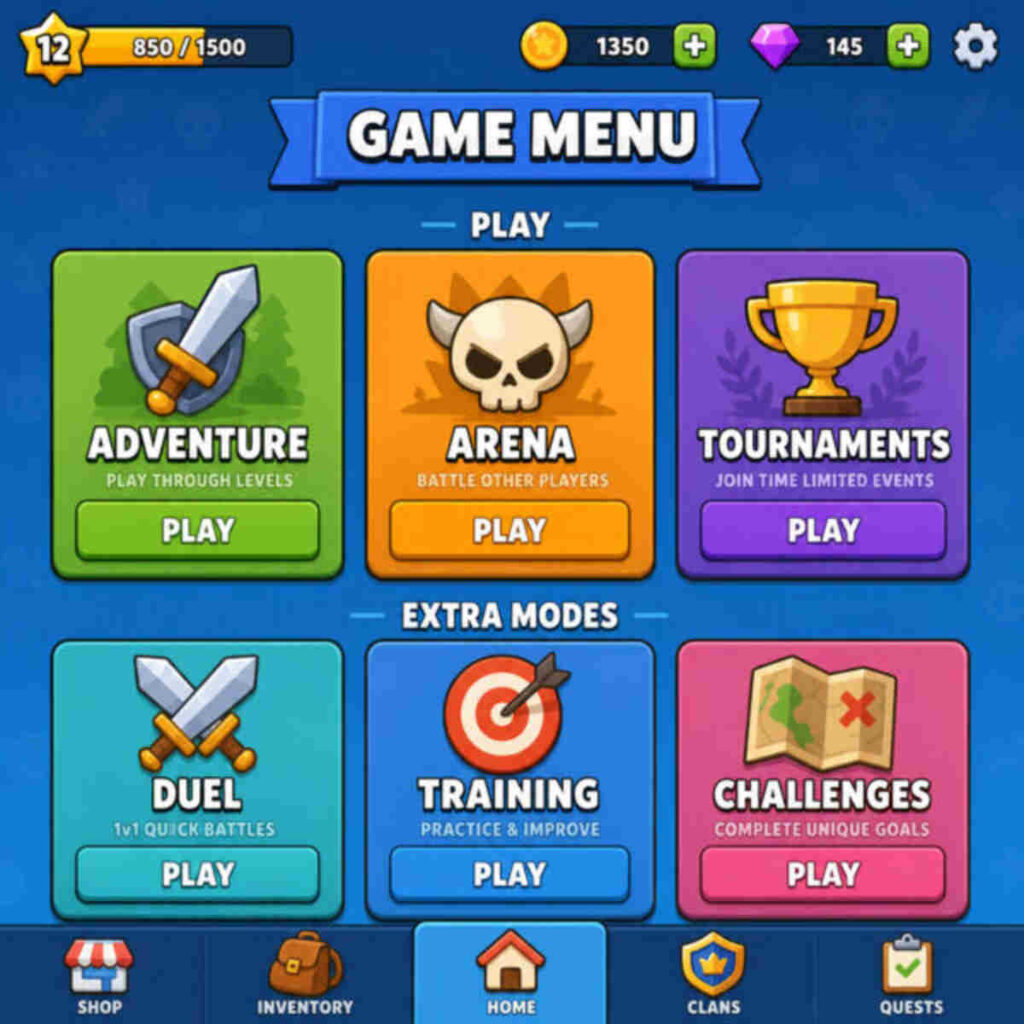
Choice architecture is the way options are organized, presented, and prioritized. In satset189 games, this might include how modes are grouped, how settings are labeled, how prompts appear, or how optional features are separated from essential actions. Good choice architecture helps players move confidently.
The key is to distinguish between primary choices and secondary choices. Primary choices are necessary to begin or continue the experience. Secondary choices customize, refine, or expand it. When these categories are mixed together, players may feel uncertain about what matters most.
A practical approach is to design around priority:
- Show the main action first. The player should never have to hunt for the core experience.
- Group related options. Similar settings or modes should appear together.
- Use plain labels. Clever names can add personality, but clarity should come first.
- Reduce repeated decisions. Remembering safe preferences can make future sessions easier.
- Offer details on demand. Let curious players learn more without forcing everyone through extra text.
- Keep exits visible. Players should know how to go back, cancel, or change direction.
This kind of structure allows mechanics to grow without making the experience feel crowded.
Reward design has shifted toward clarity and balance
Rewards are among the most visible parts of game mechanics, but they are also among the easiest to misunderstand. A reward is not only an item, badge, point, or unlock. It is any positive signal that tells the player their action had value.
Modern reward design works best when it is clear, balanced, and connected to the experience. If rewards feel too frequent, they may lose impact. If they feel too rare, players may disengage before seeing value. If they are poorly explained, players may not understand what they received or how to use it.
In satset189 games, reward clarity can improve confidence. Players should be able to identify what changed, why it changed, and what it means for the next step. This is especially important when the game includes multiple reward types, progression markers, or limited-time elements.
Reward design has evolved in several important ways:
- From surprise only to explained outcomes: Surprises can be fun, but players also need context.
- From isolated rewards to connected systems: A reward should fit into progression, choice, or session goals.
- From quantity to relevance: More rewards do not always lead to greater engagement; useful rewards matter more.
- From interruption to flow: Reward moments should celebrate progress without constantly stopping play.
- From one-size-fits-all to preference-aware design: Different players value different kinds of recognition.
A strong reward system helps players feel oriented. It gives meaning to progress without turning the entire experience into a chase for the next pop-up.
How has mobile-first design changed game mechanics?
Mobile-first design has changed game mechanics by making speed, readability, and touch comfort central to the experience. A mechanic that works on a large screen with a mouse may feel awkward on a phone if buttons are small, text is dense, or sessions require too much uninterrupted time. For satset189 games, mobile-first thinking encourages cleaner interfaces, shorter loops, easier navigation, and performance that feels stable across everyday conditions.
Touch interaction changes how designers think about controls. Players use thumbs, not cursors. They may hold the device with one hand, switch orientation, or play in environments with distractions. As a result, mechanics need clear touch targets, predictable gestures, and minimal input friction.
Mobile-first design also affects pacing. Many mobile sessions are short, so the game should respect quick entry and exit. Long loading sequences, excessive confirmations, or buried menus can make the experience feel outdated. A modern mechanic should allow the player to understand the current state quickly and resume without confusion.
Important mobile-first considerations include:
- Readable layouts: Text, icons, and status indicators should be clear on smaller screens.
- Comfortable controls: Common actions should be easy to reach and hard to mis-tap.
- Fast session starts: Players should be able to enter the core loop without unnecessary delay.
- Flexible session lengths: The experience should support both quick visits and longer play.
- Stable feedback: Animations and transitions should feel smooth without hiding important information.
- Low cognitive load: A smaller screen should not be packed with competing signals.
Mobile-first mechanics are not just smaller versions of desktop mechanics. They require a different design mindset, one that values immediacy, focus, and comfort.
Personalization without confusion
Personalization can make games feel more relevant, but it should not make the experience harder to understand. When players can adjust settings, choose modes, or follow preferred paths, they often feel a greater sense of ownership. The challenge is to provide flexibility while keeping the main structure clear.
In satset189 games, personalization may appear through interface preferences, content selection, notification controls, difficulty options, or session settings. These features are useful when they solve real player needs. They are less useful when they add layers that most players cannot interpret.
Good personalization starts with defaults. A default setting should be sensible enough for a new player to begin comfortably. Customization can then serve players who want more control. This prevents the common problem of asking people to personalize an experience before they understand it.
A practical personalization checklist includes:
- Are default settings clear and usable?
- Can players change preferences later without penalty or confusion?
- Are advanced options separated from basic controls?
- Does personalization improve comfort, clarity, or relevance?
- Are notifications and reminders easy to manage?
- Does the game avoid pressuring players into choices they do not understand?
Personalization is most effective when it feels supportive rather than demanding. It should make the experience fit the player, not make the player study the system.
Social and community features changed expectations
Games are no longer always solitary experiences, even when the core mechanics are individual. Leaderboards, shared achievements, challenges, community events, and social prompts can change how players interpret progress. They can add motivation, context, and a sense of belonging.
However, social mechanics need careful design. Not every player wants comparison, and not every game benefits from constant social pressure. If community features are too aggressive, they can distract from the main experience or make casual players feel out of place.
For satset189 games, social elements work best when they are optional, clearly explained, and aligned with the game’s purpose. A leaderboard can be exciting for competitive players, while private milestones may be better for players who prefer personal progress. Community prompts should support discovery rather than overwhelm the interface.
The evolution of social mechanics is really the evolution of context. Players may want to know what others are enjoying, what challenges are active, or how their progress compares. But they also need privacy, control, and the ability to play without being pushed into public participation.
Useful social design principles include:
- Make participation optional whenever possible.
- Avoid making comparison the only source of motivation.
- Provide clear privacy and visibility controls.
- Use community features to guide discovery, not replace gameplay.
- Celebrate personal progress as well as public achievement.
- Keep social prompts from interrupting key moments.
When social mechanics are balanced, they add energy. When they are overused, they can make the experience feel noisy.
Fairness, transparency, and player trust
Trust is one of the most important outcomes of good mechanic design. Players need to feel that rules are understandable, actions are recognized, and outcomes are presented honestly. Even a visually polished experience can fail if players feel uncertain about how the system works.
Transparency does not mean explaining every technical detail on the main screen. It means providing the right information at the right time, in language that players can understand. Rules, limits, status changes, and important conditions should not be hidden behind vague labels or hard-to-find pages.
In satset189 games, trust can be supported through clear instructions, consistent interface behavior, accessible help content, and visible controls. If a feature has conditions, those conditions should be easy to find. If an action cannot be reversed, the game should make that clear before the player confirms it.
A trust-focused design should answer these questions:
- What is the player allowed to do right now?
- What happens when the player takes the action?
- Are there limits, conditions, or timing rules?
- How can the player review or understand recent activity?
- Where can the player find help if something is unclear?
- Can the player control settings that affect their experience?
Trust grows when the game behaves consistently. If the same action produces different interface responses without explanation, players may feel confused. Consistency makes the mechanics easier to learn and easier to believe in.
Accessibility has become a design priority
Accessibility is not a side feature. It is a way of making games more usable for more people. As game mechanics evolve, accessibility becomes part of quality by improving clarity, comfort, and control for a wide range of players.
Accessible mechanics consider visual readability, motion sensitivity, audio dependence, language simplicity, input flexibility, and cognitive load. These improvements help players with specific accessibility needs, but they also improve the experience for users in everyday situations, such as playing in bright light, muted audio, or on a smaller screen.
For satset189 games, accessibility may include adjustable text size, high-contrast visuals, clear icon labels, reduced motion options, captions or text alternatives for audio cues, and simple navigation paths. It may also include forgiving input design, where accidental taps are less likely to cause major problems.
Accessibility works best when it is built into the mechanic rather than added late. If a game depends entirely on color to communicate status, for example, some players may miss essential information. Adding labels, shapes, or text cues makes the system clearer for everyone.
A practical accessibility checklist includes:
- Use readable text sizes and strong contrast.
- Avoid relying on color alone to show important status.
- Provide text alternatives for important audio cues.
- Make touch targets large enough for comfortable use.
- Allow players to reduce intense motion where appropriate.
- Keep instructions plain, direct, and easy to scan.
- Make help and settings easy to find.
Accessible design is not about lowering the quality of the experience. It is about making the intended experience available to more players.
Data-informed tuning replaced guesswork
Modern game mechanics often improve through observation and iteration. Designers can review where players hesitate, where they exit, which features they use, and which parts of the flow create friction. This does not mean every design decision should be controlled by data alone, but it does mean mechanics can be refined with better evidence than guesswork.
Data-informed tuning is valuable because player behavior can reveal problems that are not obvious during planning. A menu may look simple to a team but confuse new users. A reward may seem exciting in concept but go unnoticed in practice. A tutorial may explain too much or not enough.
For satset189 games, tuning might focus on session flow, onboarding completion, feature discovery, interface clarity, or the balance between challenge and ease. The goal should be to improve the experience, not simply increase activity at any cost. Responsible design requires considering player comfort, control, and engagement.
Good tuning follows a thoughtful process:
- Identify the friction point. Look for places where players slow down, repeat actions, or leave.
- Form a clear hypothesis. Decide what might be causing the issue.
- Change one meaningful element. Avoid changing too many things at once.
- Observe the effect. Review whether the change improves clarity or flow.
- Consider the human context. Numbers need interpretation; not every increase is automatically better.
- Keep the experience ethical. Do not use tuning to pressure players or hide important information.
Data is most useful when paired with design judgment. It can point to a problem, but the solution still needs empathy, clarity, and purpose.
Responsible play features are part of modern mechanics
Responsible play is an essential part of modern game design, especially when games involve risk, rewards, purchases, or extended sessions. Mechanics should not only encourage participation; they should also help players stay aware, make informed choices, and set healthy boundaries.
In satset189 games, responsible play features may include clear limits, session reminders, easy access to account controls, transparent rules, and settings that allow players to manage their experience. These features should be visible enough to matter and simple enough to use without confusion.
Responsible design also affects language. Interface messages should avoid pressure, urgency, or exaggerated promises. A game can be engaging without pushing players to continue when they intended to stop. Clear wording helps maintain trust and supports better decision-making.
Helpful responsible play mechanics include:
- Session awareness: Reminders or indicators that help players track time.
- Limit settings: Tools that allow players to set boundaries where relevant.
- Clear rules: Easy-to-find explanations of how features work.
- Reality checks: Neutral prompts that encourage awareness rather than pressure.
- Easy exits: Simple ways to pause, stop, or leave a session.
- Support access: Visible pathways to help or account controls.
Responsible play should not feel hidden in a footer or buried in settings. It should be integrated into the overall experience in a calm, practical, and respectful way.
Visual and audio design now carry mechanical meaning
Visuals and sound are often described as presentation, but they also shape mechanics. A visual cue can tell the player where to focus. A sound can confirm a successful action. A change in motion can signal a transition from one phase to another.
As game mechanics evolve, visual and audio design become more intentional. Effects are not simply added to make the screen lively. They are used to guide attention, clarify status, and create rhythm. This is especially important in games where players make quick decisions or monitor changing information.
In satset189 games, visual hierarchy should make important information easy to identify. The most important action should stand out. Current status should be visible without searching. Secondary details should support the experience without competing for attention.
Audio should also be useful rather than constant. Some players use sound as a key part of feedback, while others play muted. That means important information should not depend on sound alone. A strong design uses audio to enhance feedback while ensuring that visual or textual cues convey the essential message.
Effective sensory design often includes:
- Consistent colors, icons, and motion patterns.
- Clear separation between primary and secondary actions.
- Animations that explain transitions rather than delay them.
- Sound cues that confirm meaningful events.
- Muted-play support through visual alternatives.
- Reduced motion options for sensitive users.
When presentation supports mechanics, the game feels polished and understandable. When it competes with mechanics, it becomes a distraction.
Content variety keeps familiar mechanics fresh
Even strong mechanics can feel repetitive if the surrounding content never changes. Variety helps players return with curiosity while relying on familiar rules. The trick is to add freshness without breaking the clarity that made the original experience work.
Content variety can include themes, modes, challenges, seasonal elements, difficulty variations, or different session formats. In satset189 games, variety should help players find experiences that match their mood and the time they have available. A quick mode can serve a short break, while a deeper mode can support a more focused session.
The best variety is organized. If new content appears without structure, players may struggle to know what is worth trying. Clear categories, previews, labels, and recommendations can help players explore without feeling lost.
Variety should also respect the game’s core identity. If every update changes the rules too much, players may feel they must relearn the experience repeatedly. If updates only change surface visuals, they may feel shallow. The balance is to keep the core loop stable while adding meaningful differences around it.
Practical ways to create healthy variety include:
- Introduce modes that serve different session lengths.
- Use themes to refresh atmosphere without hiding key information.
- Offer challenges that teach or highlight specific mechanics.
- Keep core controls consistent across variations.
- Label new content clearly so players understand what changed.
- Retire or simplify features that create clutter.
Variety is not about adding endlessly. It is about keeping the experience alive while preserving confidence.
Common design pitfalls that slow evolution
Not every change improves a game. Some updates add friction, create confusion, or dilute the core experience. Understanding common pitfalls helps explain why the evolution of mechanics requires discipline.
One common pitfall is feature stacking. This happens when new systems are added because they seem interesting, not because they improve the player journey. Too many menus, currencies, badges, prompts, or modes can make a game feel busy without making it better.
Another pitfall is unclear prioritization. If every element on the screen appears equally important, players have to work harder to make simple decisions. A clear hierarchy tells players what to do now, what to review later, and what is optional.
A third pitfall is over-reliance on novelty. New visuals or events may create short-term interest, but they cannot compensate for weak pacing, unclear rules, or poor feedback. Sustainable engagement comes from mechanics that remain satisfying after the first impression fades.
Design teams should watch for these warning signs:
- Players need repeated explanations for basic actions.
- Important rules are hidden or written in vague language.
- The interface has too many competing prompts.
- Rewards appear often but do not feel meaningful.
- New features make older features harder to find.
- Mobile controls feel cramped or error-prone.
- Players cannot easily pause, exit, or adjust settings.
A good update should make the experience clearer, deeper, or more enjoyable. If it only makes the system larger, it may not be true evolution.
Practical lessons for understanding satset189 games
For players, understanding mechanics can make the experience more enjoyable and less confusing. Instead of focusing only on outcomes, it helps to notice how the game communicates rules, choices, and progress. A well-designed game should not require constant guessing.
When exploring satset189 games, pay attention to the first few minutes. Do the controls make sense? Is feedback clear? Can you find rules and settings easily? Does the game help you understand what happened after each action? These early signals often reveal the quality of the underlying mechanics.
It also helps to recognize your own play preferences. Some players enjoy fast loops and quick feedback. Others prefer deeper progression, more customization, or social features. A game that feels excellent for one person may feel too busy or too slow for another.
A simple player checklist can help:
- I understand the main action and what it does.
- I can clearly see the current state of the game.
- I know where to find rules, help, and settings.
- I can pause, stop, or change direction without confusion.
- Rewards or progress indicators are explained clearly.
- The game feels comfortable on my device.
- I can manage notifications, limits, or personal preferences.
- The experience feels engaging without feeling pressuring.
This checklist is not about judging a game harshly. It is about becoming a more informed player and choosing experiences that match your expectations.
The future is simpler, smarter, and more respectful
The next stage of game mechanic evolution is likely to focus less on raw complexity and more on intelligent simplicity. Players do not necessarily want more systems; they want systems that are easier to understand, more comfortable to use, and more respectful of their time.
For satset189 games, the strongest mechanics will likely be those that combine clear rules, smooth onboarding, meaningful choice, responsible-play tools, and accessible design. The experience should feel polished without becoming overwhelming. It should offer depth without hiding the basics.
Smarter design also means better adaptation. Games can become more helpful by remembering preferences, presenting relevant options, and reducing repeated friction. But adaptation should always remain transparent. Players should feel supported, not manipulated.
Respect is the central theme. Respect the player’s attention by reducing clutter. Respect their understanding by explaining important rules. Respect their comfort by offering accessibility and control. Respect their boundaries through responsible play features.
When mechanics evolve in that direction, the result is not just a more modern game. It is a better relationship between the player and the experience.
Key takeaways
The evolution of Satset189 game mechanics is best understood as a move toward clarity, balance, and player-centered design. Strong mechanics do not depend only on visual polish or a long list of features. They depend on how well the game helps players act, understand, progress, and stay in control.
The most important lessons are straightforward:
- A strong core loop remains the foundation of every engaging experience.
- Feedback systems turn actions and outcomes into understandable moments.
- Progression gives sessions structure, but it must be paced carefully.
- Mobile-first design changes control, layout, and session expectations.
- Personalization works best when defaults are already clear.
- Social features should add context without creating pressure.
- Accessibility improves usability for everyone, not only specific groups.
- Responsible play features are part of modern, trustworthy design.
- Variety keeps games fresh when it supports the core experience.
- True evolution makes mechanics clearer and more meaningful, not merely bigger.
Satset189 games, like modern digital games in general, are strongest when mechanics serve the player experience from the first interaction to the final session moment. The future belongs to designs that are easy to enter, rewarding to understand, and respectful enough to let players stay in control.
