



The three week rule is a simple relationship idea: if two partners are separated by work, travel, family, or distance, they try not to go more than about three weeks without seeing each other in person. It became widely discussed because Leslie Bibb and Sam Rockwell have described using a two-to-three-week rhythm to reconnect when their schedules pull them apart. The science does not prove that 21 days is a magic number, but it does explain why planned reunions, consistent contact, and protected couple time can help people feel more secure. Check out the Best info about ısparta escort.
What is the three week rule?
The three week rule is a practical agreement to keep separation from stretching so long that a relationship starts running only on memory, texts, and good intentions. In the version linked to Leslie Bibb and Sam Rockwell, the idea is to see each other after roughly two to three weeks apart, especially when work keeps them in different places. Sam Rockwell told Us Weekly in 2018 that they had a “two to three week rule” and then made sure to see each other, which is the celebrity quote that helped the idea travel online.
That matters because the rule is not really about the number three. It is about choosing a repeatable rhythm before life gets messy. When couples wait until they “find time,” time often disappears. When they decide, “We do not let this go past three weeks if we can help it,” they turn connection into a planned priority instead of a leftover.
You may see people search for the leslie bibb three week rule or the three week rule sam rockwell because the phrase sounds like a secret formula. It is not a secret, and it is not a formula. It is more like a boundary around closeness: distance can happen, but drifting should not.
The rule works because it creates a predictable reunion point
One of the biggest emotional problems with distance is uncertainty. If you do not know when you will see someone again, your mind has too much room to fill in the blanks. You may start wondering whether the relationship is slipping, whether your partner is as invested as you are, or whether you are becoming less central in each other’s lives.
A three-week plan gives the relationship a visible checkpoint. Even if the days are busy, both people can point to a date and say, “That is when we come back together.” In long-distance relationship research, periodic face-to-face interaction has been associated with stronger maintenance behaviors, satisfaction, and commitment compared with relationships that have no in-person interaction.
This is why the three week rule can feel comforting. It reduces the vague ache of “when will this end?” and replaces it with something concrete. The calendar becomes part of the relationship support system.
Predictability calms the nervous system
People tend to handle absence better when they know what to expect. A hard week feels different when you know a hug, a dinner, or a quiet weekend together is already on the way. That expectation can help partners tolerate the stress of being apart because separation has an endpoint.
This does not mean every couple needs a strict 21-day countdown. Some people can go longer and feel fine. Others need shorter intervals. The useful part is not the exact number; it is the shared expectation.
Reunions give communication a place to land
Texts, calls, voice notes, and video chats all help, but they do not always finish the emotional loop. A partner can say, “I miss you,” but the body still knows the difference between a message and a real embrace. In-person time gives all those small digital moments somewhere to land.
That is one quiet strength of the three week rule. It says digital contact matters, but it should not be the whole relationship if seeing each other is possible. The reunion becomes a reset point where partners can laugh, talk, touch, and remember the ordinary ease that distance sometimes hides.
Why does three weeks feel like a meaningful limit?
Three weeks feels meaningful because it is long enough for people to miss each other, but often short enough to keep the relationship from feeling abstract. It gives partners time to live their separate routines, handle work, and keep their own independence, while still creating a regular return to shared life. The science does not identify three weeks as a universal relationship deadline, but it does support the broader idea that closeness needs maintenance.
Think of a relationship like a conversation that continues over time. When you are together often, the conversation has lots of little updates: what annoyed you this morning, what made you laugh, what you are worried about, what you want for dinner. When you are apart, those updates can shrink or become curated.
Research on long-distance dating has found that long-distance partners may communicate with more intimacy, but they may also avoid conflict, avoid certain topics, and present themselves more positively than they would in a geographically close relationship. That is not automatically bad. A little kindness and optimism can help. But if every call becomes a highlight reel, partners may stop seeing the full picture.
A reunion every few weeks can soften that problem. It brings back the unscripted stuff. You notice mood, energy, habits, stress, affection, and tone. You get the small moments that are hard to schedule: standing in the kitchen, walking to the car, sharing silence without wondering if the Wi-Fi froze.
The number is a container, not a cure
Here is where we need to be honest. The three week rule will not fix poor communication, broken trust, mismatched values, or chronic avoidance. A couple can see each other every week and still feel lonely. Another couple can go a month apart and stay deeply connected because they communicate well and trust each other.
So the number is not the cure. The number is the container. It gives the couple a structure where the real work can happen.
That real work includes:
- Checking in with honesty, not just politeness.
- Making future plans before stress builds.
- Talking about needs without turning every need into a crisis.
- Creating rituals that both partners actually enjoy.
- Protecting the relationship from becoming an afterthought.
Three weeks may also work because it is easy to remember
Good rules are usually simple. “Let’s try not to go longer than three weeks” is easier to remember than a complicated formula about travel days, emotional bandwidth, work intensity, and attachment style. Simple rules are useful because people can apply them when they are tired.
That simplicity is probably one reason the phrase became catchy. The three week rule sounds clean. It gives people a quick way to talk about something many couples already understand: love needs time, and time needs planning.
The attachment science behind wanting to close the gap
Attachment theory gives us one useful lens for understanding the three week rule. In adult romantic relationships, partners can become important attachment figures: people we turn toward for comfort, reassurance, safety, and support. Research on committed couples describes attachment functions such as proximity seeking, safe haven, separation protest, and secure base as part of how people rely on important partners.
In plain English, that means your partner may become one of the people your system looks for when life feels heavy. You want them nearby not because you are weak, but because close bonds are partly built around access. We are social creatures. We regulate through connection.
When distance interrupts that access, people respond in different ways. Some become anxious and need more reassurance. Some become avoidant and act like they need nothing. Some stay pretty steady as long as the relationship feels reliable. The three week rule can help because it offers a practical answer to the attachment question: “When do I get to be close again?”
Secure connection is not constant contact
A secure relationship does not mean two people are always together. In fact, a healthy bond usually makes room for separate work, friendships, rest, and identity. The goal is not to remove distance from life. The goal is to make distance feel chosen, managed, and temporary when possible.
That is an important difference. Constant contact can become draining. No contact can become painful. Secure contact sits somewhere in the middle: enough connection to feel held, enough space to feel free.
The three week rule is one way to build that middle ground. It says, “We can be apart, but we do not disappear from each other.”
Separation feels harder when the plan is unclear
Many couples do not struggle only because they are apart. They struggle because the apartness feels open-ended. One partner says, “I’m busy right now,” and the other hears, “You are not a priority.” One partner assumes everything is fine, while the other is counting days and swallowing resentment.
A clear reunion rhythm prevents some of that mind-reading. It gives both partners language. Instead of arguing from panic, they can ask, “Are we still protecting our three-week window?” That question is much easier to answer than “Do you even care about me anymore?”
The communication science behind staying close while apart
Seeing each other matters, but what happens between visits matters too. Long-distance relationships are not held together by reunions alone. They are held together by the small maintenance behaviors that keep the relationship emotionally alive during the gap.
Relationship maintenance research often looks at behaviors such as openness, assurances, shared tasks, positivity, and conflict management. Studies of long-distance relationships show that partners adapt their communication and perceptions in ways that help them maintain closeness across distance. One study found that people in long-distance relationships reported greater self-disclosure and greater responsiveness than geographically close partners, suggesting that distance can push couples to communicate more intentionally.
That is the good news. Distance can make people lazy, yes. But it can also make people more deliberate. When you cannot rely on bumping into each other at breakfast, you may learn to say what you mean.
Quality beats constant quantity
A couple does not need to be on the phone all day to be close. In fact, too much forced contact can make communication feel like homework. What helps more is a rhythm that feels warm, reliable, and real.
Good communication while apart usually includes three things:
- Presence: You are not just exchanging logistics. You are emotionally available in the moment.
- Responsiveness: You show that you heard what your partner said and care about it.
- Continuity: You remember previous conversations and follow up later.
A short call that includes those three things can do more than three hours of distracted scrolling on video chat. The point is not to prove devotion through screen time. The point is to keep the bond active.
Digital tools help, but they need intention
Social networking sites and messaging apps can help partners express involvement, observe each other’s lives, and maintain connection across distance. Research has examined how social networking sites are used for relationship maintenance in long-distance and geographically close romantic relationships, including both supportive behaviors and more complicated patterns like surveillance or jealousy.
That is exactly the tension most people feel. A photo can make you feel included. It can also make you wonder who else was there, why you were not told, or why your partner looked happier without you. The tool is neutral. The habit around the tool is what matters.
Try using digital contact to create closeness, not monitor each other. Send the funny thing. Share the boring detail. Ask the real question. But avoid turning every post, delay, or read receipt into evidence.
A practical way to use the three week rule
The three week rule works best when couples treat it as a flexible agreement, not a romantic law. Life will interrupt it. Work, money, health, parenting, caregiving, travel delays, and plain exhaustion can make an exact three-week schedule unrealistic. Even celebrity couples who talk about the rule have acknowledged that work can stretch the timeline; Elle reported Leslie Bibb saying their three-week rule had once turned into three months because of schedules.
So build the rule like a human being, not a robot. The goal is not to punish each other for missing the mark. The goal is to notice when the gap is getting too wide and respond before resentment hardens.
Here is a simple version you can adapt:
- Choose your maximum gap. Start with three weeks if that feels reasonable. If it does not, choose two, four, or whatever fits your life.
- Schedule the next visit before the current one ends. Do not leave the next reunion floating in the air.
- Decide who travels and when. Be honest about money, energy, work hours, and fairness.
- Plan one anchor activity. This could be dinner, a walk, a quiet morning, or a shared errand. It does not need to be fancy.
- Protect recovery time. If one person arrives exhausted, do not pack every minute.
- Review the rhythm monthly. Ask what is working, what feels heavy, and what needs adjusting.
Notice how ordinary that list is. That is the point. Strong relationships are often supported by very ordinary systems.
Make the rule mutual
A relationship rule only works if both people feel included in making it. If one partner announces, “We are doing the three week rule now,” the other may feel managed instead of loved. That creates resistance.
A better approach is collaborative. Try saying, “I feel better when I know when we will see each other next. What is a realistic maximum gap for us?” That sentence is calm, specific, and open. It invites problem-solving instead of blame.
Make the rule visible
Put visits on a shared calendar. Add travel details, work conflicts, and possible backup dates. Visibility reduces the mental load, especially if one partner tends to become the unofficial planner.
This also helps prevent the classic relationship problem where one person thinks, “I guess I’m the only one who cares.” When both people can see the plan and contribute to it, the relationship feels less one-sided.
Common mistakes couples make with the three week rule
The three week rule sounds simple, but people can still use it in ways that create pressure instead of closeness. That usually happens when the rule becomes a test. If the hidden message is “prove you love me by making this happen no matter what,” the rule may create anxiety.
A healthy rule supports the relationship. An unhealthy rule becomes a weapon. The difference is often in how partners talk about it when life gets complicated.
Treating three weeks as magic
There is no solid reason to believe that every couple starts emotionally falling apart on day 22. People vary. Jobs vary. Travel budgets vary. Attachment needs vary. The three-week mark is useful because it is memorable and often practical, not because it is biologically perfect.
If you treat the number as magic, you may ignore what your actual relationship is telling you. Maybe you need more contact after ten days. Maybe you are fine for a month if the communication is strong. Pay attention to patterns, not just slogans.
Using the rule to avoid deeper conversations
Some couples keep scheduling visits but never talk about the bigger issue: where the relationship is going. They have lovely weekends, painful goodbyes, and then the same uncertainty returns. In that case, the three week rule is helping them cope, but it is not helping them decide.
If the distance is long-term, you eventually need conversations about location, career, family, money, and commitment. Those talks can be awkward. Have them anyway. A reunion rhythm is helpful, but it should not become a way to postpone the future forever.
Overloading every reunion
When couples have limited time, they sometimes try to make every visit perfect. They plan too much, spend too much, socialize too much, or expect constant romance. Then one tired mood feels like failure.
Leave space for normal life. Cook a basic meal. Fold laundry. Take a nap. Watch something silly. Real closeness often returns in the low-pressure moments.
Ignoring unequal effort
If one person always travels, pays, rearranges work, or initiates plans, the rule may quietly become unfair. Over time, that imbalance can turn into resentment. The three week rule should distribute effort in a way both people can respect.
Fair does not always mean equal. If one partner has more money and the other has more schedule flexibility, they may contribute differently. The key is to name it, agree on it, and revisit it.
The three week rule and long-distance relationships
Long-distance couples can use the three week rule as a relationship maintenance tool, but they should pair it with a bigger communication plan. Distance adds practical stress. Flights cost money. Time zones get annoying. Work schedules may not match. Some visits require planning around children, roommates, pets, or family expectations.
A three-week target can still help because it creates a default. Instead of renegotiating the importance of seeing each other every time, the couple begins with the assumption that visits matter. Then they solve the practical problem from there.
A simple long-distance check-in plan
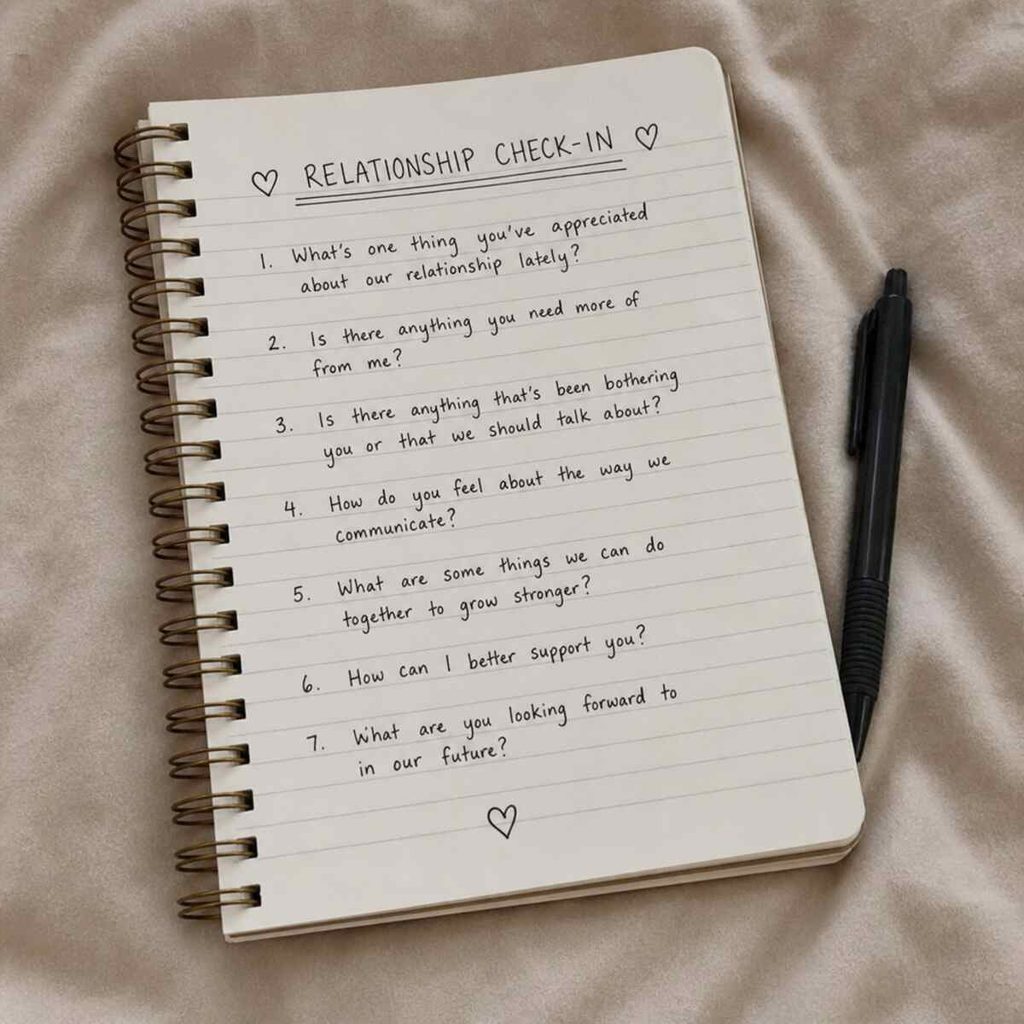
If you want to try the three week rule, use it with a check-in routine like this:
- Daily light contact: A quick message, photo, voice note, or “thinking of you” moment.
- Two or three real conversations each week: Not just logistics. Talk about feelings, stress, plans, and funny details.
- One weekly planning touchpoint: Confirm schedules, travel needs, and any changes.
- One shared experience: Watch the same episode, cook the same meal, read the same article, play a game, or take a walk while on the phone.
- One honest emotional question: Ask something like, “How are we doing with the distance this week?”
This structure is simple on purpose. You do not need a relationship spreadsheet. You need enough repeated contact to keep the bond warm and enough honesty to keep it real.
The goal is emotional continuity
Emotional continuity means the relationship still feels like an ongoing shared life, even when you are in different places. You know what your partner is dealing with. They know what is happening in your world. You are not starting from zero every time you talk.
The three week rule supports that continuity by making in-person time part of the loop. Calls carry the relationship forward. Visits deepen it. Then calls carry it forward again.
The three week rule for busy couples who live together
You do not have to be long-distance to learn from the three week rule. Some couples live in the same house and still feel far apart. Work, kids, phones, caregiving, side projects, social obligations, and burnout can turn partners into polite roommates.
For these couples, the rule can be adapted. Instead of “we cannot go more than three weeks without seeing each other,” it becomes “we cannot go more than three weeks without protected couple time.” That may mean a real date, a half-day together, a no-phone dinner, or a quiet morning where nobody is multitasking.
The idea is the same: do not let the relationship run on fumes.
Signs you may need a version of the rule
You may benefit from a three-week-style rhythm if you notice these patterns:
- You talk mostly about chores, schedules, bills, or problems.
- You cannot remember the last relaxed conversation you had.
- One or both of you keep saying, “We should spend time together soon,” but nothing changes.
- Affection is still there, but it feels buried under logistics.
- Small misunderstandings are getting sharper than they need to be.
- You feel lonely even though you are technically together often.
These signs do not mean the relationship is doomed. They mean the relationship needs attention. Attention is easier to give when it is scheduled before everything else takes the space.
Protected time does not have to be dramatic
Please do not make the mistake of thinking couple time needs to be impressive. A walk counts. Coffee without phones counts. Sitting in the car for ten extra minutes because the conversation got good counts. The relationship does not always need an event. Sometimes it just needs room.
A three-week rhythm works best when it is sustainable. If every date requires reservations, outfits, babysitters, and a budget panic, you may avoid planning it. Keep some rituals small enough to repeat.
The habit myth and the 21-day confusion
Some people hear “three week rule” and connect it to the popular idea that habits form in 21 days. That connection is understandable, but it can be misleading. The relationship version of the three week rule is about maintaining closeness during separation, not about proving that a habit becomes automatic after exactly three weeks.
The broader habit science is more nuanced. A well-known study on habit formation found wide variation in how long automaticity took to develop, depending on the person and the behavior. Actually, that cited source is about long-distance communication, not habits, so let’s put the habit point more carefully: the three week relationship rule should not be treated as a scientific habit deadline unless you are working from habit-specific research.
For relationship purposes, the important point is simpler: repeated actions shape expectations. If you repeatedly make time to reconnect, your partner learns that connection is dependable. If you repeatedly let plans drift, your partner may learn that the relationship is easy to postpone.
That is the real habit layer. Not “21 days changes everything.” More like, “What we repeat becomes what the relationship expects.”
How to talk about the rule without sounding demanding
A lot of people struggle here. They want closeness, but they do not want to sound needy. They want reassurance, but they do not want to start a fight. So they hint, joke, withdraw, or wait for the other person to magically understand.
As a writing teacher, I always come back to one principle: clear language reduces emotional mess. That is true in essays, emails, and relationships. Say the thing plainly, kindly, and early.
Try these scripts and adjust them so they sound like you:
- “I do better with distance when I know when I’ll see you next. Can we pick a date before this trip gets too busy?”
- “Three weeks feels like my limit before I start feeling disconnected. What feels realistic for you?”
- “I’m not asking for constant contact. I’m asking for a plan we both protect.”
- “If work makes three weeks impossible, can we choose the next best date now instead of leaving it open?”
- “I want this to feel fair, so let’s talk about travel, money, and effort before we commit to a schedule.”
Notice the tone. These lines are direct, not dramatic. They explain the need and invite a shared solution.
Use “I” language, then make a specific request
The easiest structure is this:
- “I feel…”
- “I need…”
- “Could we…”
For example: “I feel disconnected when too much time passes without a visit. I need a clearer plan. Could we try not to go more than three weeks without seeing each other?”
That is much better than “You never make time for me.” The first version opens a door. The second version starts a trial.
Avoid pretending you are fine
Pretending is expensive. If you say “no worries” every time a visit gets delayed, but you are quietly building resentment, the relationship will eventually pay for that silence. A calm truth now is kinder than an explosion later.
This does not mean every disappointment needs a major conversation. It means repeated disappointment needs language. The three week rule gives you a practical place to begin.
When the three week rule is not enough
The three week rule can support a healthy relationship, but it cannot carry an unhealthy one by itself. If someone is unreliable, dismissive, dishonest, or unwilling to make any effort, a schedule will not solve the deeper problem. It may simply make the imbalance easier to see.
That is still useful information. A good relationship rule does two things: it helps willing partners stay connected, and it reveals when one partner is not willing to participate.
Watch the pattern, not the promise
Anyone can say, “Of course I want to see you.” The pattern matters more. Do they help plan? Do they follow through? Do they communicate early when something changes? Do they care how the distance affects you?
If the answer is usually yes, missed visits are probably a life problem. If the answer is usually no, the three week rule may be pointing to a relationship problem.
Consider outside support when talks go in circles
If conversations about time, distance, or commitment keep turning into the same argument, outside support can help. That may mean couples counseling, individual therapy, a trusted mentor, or simply a structured conversation where both people agree to listen before defending themselves.
You do not need to wait until everything is broken to ask for help. Sometimes support is just a way to stop repeating the same misunderstanding.
A quick self-check before trying the rule
Before you bring up the three week rule, take a few minutes to understand what you are really asking for. This makes the conversation cleaner. It also helps you avoid borrowing a celebrity relationship rule without checking whether it fits your actual life.
Ask yourself:
- What do I feel when we go too long without seeing each other? Anxious, lonely, forgotten, disconnected, resentful, or simply sad?
- What kind of contact helps me most? In-person time, phone calls, video, texts, shared activities, or practical planning?
- What maximum gap feels realistic, not ideal? Be honest about money, distance, schedules, and energy.
- What am I willing to contribute? Travel, planning, flexibility, money, emotional patience, or schedule changes?
- What would make the rule feel fair to both of us? Think beyond your own needs.
- What problem am I hoping this solves? Missing each other is one problem. Avoiding commitment is another.
This self-check is not about talking yourself out of your needs. It is about naming them accurately. The more accurate your language, the better your chances of getting a useful answer.
What Leslie Bibb and Sam Rockwell’s example can and cannot teach us
The public interest in the leslie bibb three week rule makes sense because people love a simple detail from a long-running celebrity relationship. Leslie Bibb and Sam Rockwell have been discussed in entertainment coverage as longtime partners, and their three-week idea gives people something specific to notice. Elle has also described their relationship timeline and repeated the three-week rule in the context of their work schedules and public appearances.
But celebrity examples have limits. Most people do not have the same resources, schedule flexibility, travel access, or work structure as actors. For some couples, three weeks is easy. For others, it is financially impossible. For parents, caregivers, shift workers, military families, students, and people with health issues, the rule may need a serious rewrite.
So do not copy the surface. Copy the principle.
The principle is this: name the kind of connection your relationship needs, then build a repeatable structure around it.
That might look like:
- Seeing each other every three weeks when travel is realistic.
- Having one protected weekend each month.
- Planning the next visit before saying goodbye.
- Creating a weekly long call when visits are impossible.
- Saving money together for the next reunion.
- Treating missed visits as a shared problem, not a personal rejection.
That is the usable lesson. Not fame. Not perfection. Not a magic number. Just intentional closeness.
How to create your own version of the three week rule
If the classic three week rule does not fit your life, build your own. A good relationship rule should be clear enough to guide behavior and flexible enough to survive reality. If it is too vague, it will not help. If it is too rigid, it will break.
Use this simple framework:
Step 1: Name the need
Start with the emotional need, not the schedule. Are you asking for reassurance? More physical closeness? Better planning? Less uncertainty? More equal effort?
For example, “I need to know when I’ll see you again” is different from “I need you to text me constantly.” If you name the need correctly, the solution becomes easier to design.
Step 2: Pick a realistic rhythm
Three weeks is a starting point, not a command. Choose a rhythm that your real life can support. If you choose an impossible schedule, you are building failure into the rule.
A realistic rhythm may include backup options. For example: “We aim for every three weeks, but if travel is impossible, we schedule a longer video date and book the next in-person visit before the fourth week ends.” That kind of rule has both care and flexibility.
Step 3: Decide what counts as connection
Be specific. Does a rushed dinner count? Does a weekend with ten friends count? Does sleeping in the same house count if you barely talk? Different couples will answer differently.
You may decide that connection means at least one stretch of focused time. It does not have to be long, but it should be intentional. Otherwise, you may technically follow the rule while still feeling emotionally untouched.
Step 4: Review without blaming
After a month or two, ask how the rhythm feels. This is not a performance review. It is maintenance. Good couples revise systems when life changes.
Helpful review questions include:
- “Do we feel more connected?”
- “Is the travel fair?”
- “Are we communicating enough between visits?”
- “What feels easy to keep doing?”
- “What feels too hard right now?”
The best relationship rules are living agreements. They grow with the people using them.
The real science is maintenance, not magic
The science behind the three week rule is really the science of relationship maintenance. Couples tend to do better when they have reliable ways to create closeness, manage uncertainty, communicate honestly, and return to each other after separation. Research on long-distance relationships points again and again to the importance of communication, commitment, trust, and meaningful contact rather than one perfect timeline.
That should be encouraging. You do not have to follow the rule perfectly to benefit from it. You just have to understand what it is trying to protect.
It protects the relationship from drift.
It protects partners from guessing forever.
It protects closeness from being pushed to “someday.”
And maybe most importantly, it turns love into something you practice, not just something you feel.
Final takeaway
The three week rule is not a scientific law, but it is a smart relationship practice when it is used with care. It gives couples a simple way to plan in-person connection, reduce uncertainty, and keep emotional closeness from fading during busy or distant seasons. The reason the three week rule has caught attention through Leslie Bibb and Sam Rockwell is not because the number is perfect; it is because the idea is easy to understand and even easier to adapt.
If you want to try it, start small. Pick a realistic maximum gap, schedule the next moment of connection early, and talk openly about what each of you needs between visits. A relationship does not stay strong because two people never separate. It stays strong because they keep choosing ways to come back.