


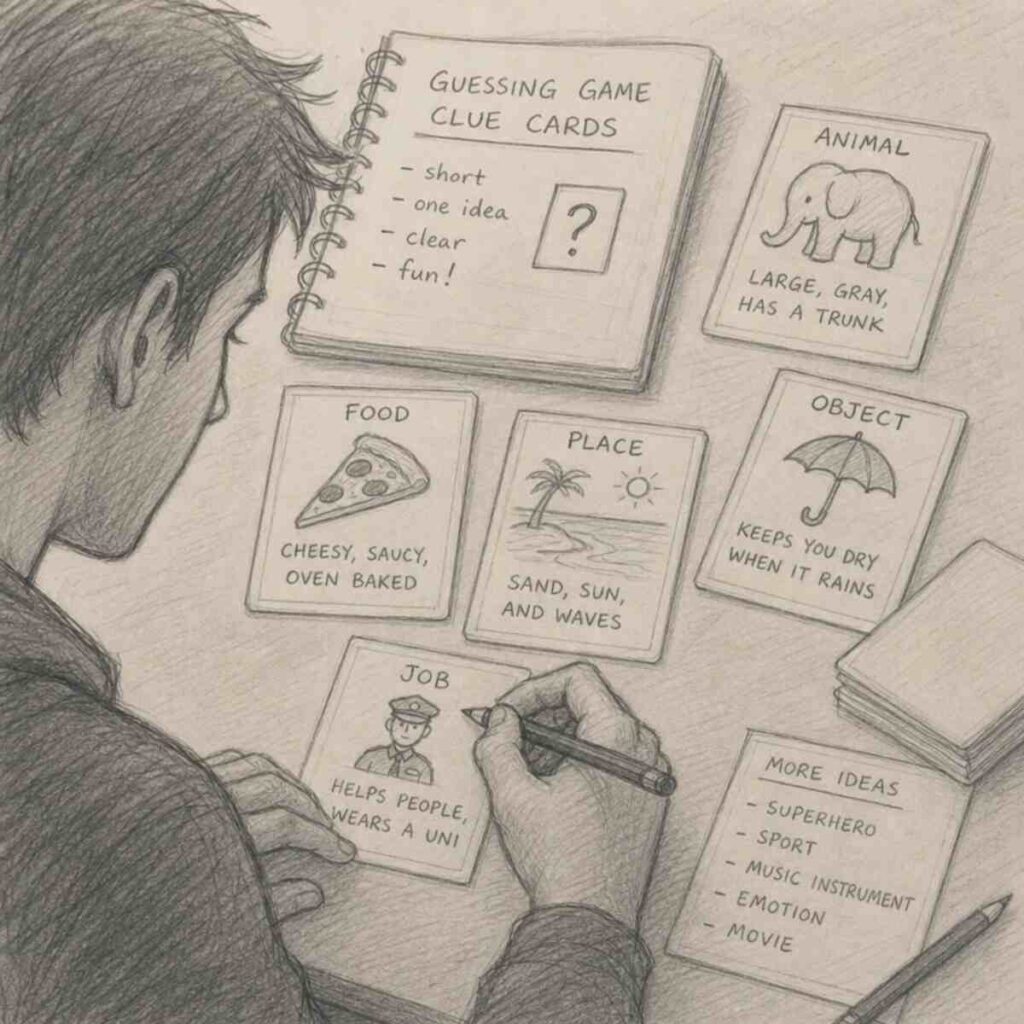
Creating your own guessthegame experience is about more than hiding a title and asking players to solve it. A strong guess the game challenge gives people a clear objective, fair clues, satisfying progression, and a reason to come back. Whether you are building a daily browser puzzle, a party activity, a social media challenge, or a classroom game, the best guessing games feel simple on the surface and carefully designed underneath. Typically the Interesting Info about phantom333.
What makes a good guess the game experience?
A good guess the game experience gives players just enough information to feel curious, not confused. The player should understand what they are trying to identify, how many attempts they have, what clues will appear next, and what counts as a correct answer. When the rules are clear and the challenge feels fair, even a wrong guess can be enjoyable because it moves the player closer to the answer.
The heart of this kind of game is recognition. Players enjoy testing what they know, noticing small details, and getting that satisfying moment when the answer clicks. Your job as the creator is to guide that moment without making the solution obvious too early.
A strong game also respects the player’s time. It loads quickly, explains itself fast, and avoids unnecessary friction. If someone can understand the challenge in a few seconds and play a full round in a minute or two, you are already close to a format people can share and repeat.
Start with a clear player promise
Before you choose clues, artwork, categories, or scoring, define the promise your game makes to players. This is the simple reason someone would play your version instead of any other guessing game. It might be nostalgia, competition, discovery, humor, niche knowledge, or a quick daily brain teaser.
For example, your promise might be: “Identify a video game from a sequence of increasingly revealing screenshots.” Another version might be: “Guess the game from vague plot descriptions that become more specific after each wrong answer.” A party version could promise: “Make your friends guess the game using only sound effects, quotes, or gestures.”
A clear promise helps every later decision. If your game is meant to be fast and casual, you probably do not need complex scoring or long clue chains. If your game is for hardcore fans, you can use deeper references, obscure mechanics, and narrower categories. If it is for students, you may want educational hints, a review mode, or teacher-controlled answer sets.
Try writing your promise in one sentence:
- “Players will guess the game using progressively easier visual clues.”
- “Players will identify games from mechanics, genres, and release-era hints.”
- “Players will compete to solve video game titles with the fewest clues.”
- “Players will discover new games through spoiler-light descriptions and recommendations.”
If that sentence feels vague, keep refining. A focused concept is easier to design, easier to explain, and easier to improve.
Choose a format that fits your audience
The format determines how players interact with the challenge. Many creators begin by copying the structure of popular daily guessing games, but your version will be stronger if the format supports your audience and content. Think about what your players already know, how they like to play, and where they will encounter the game.
Visual clue formats
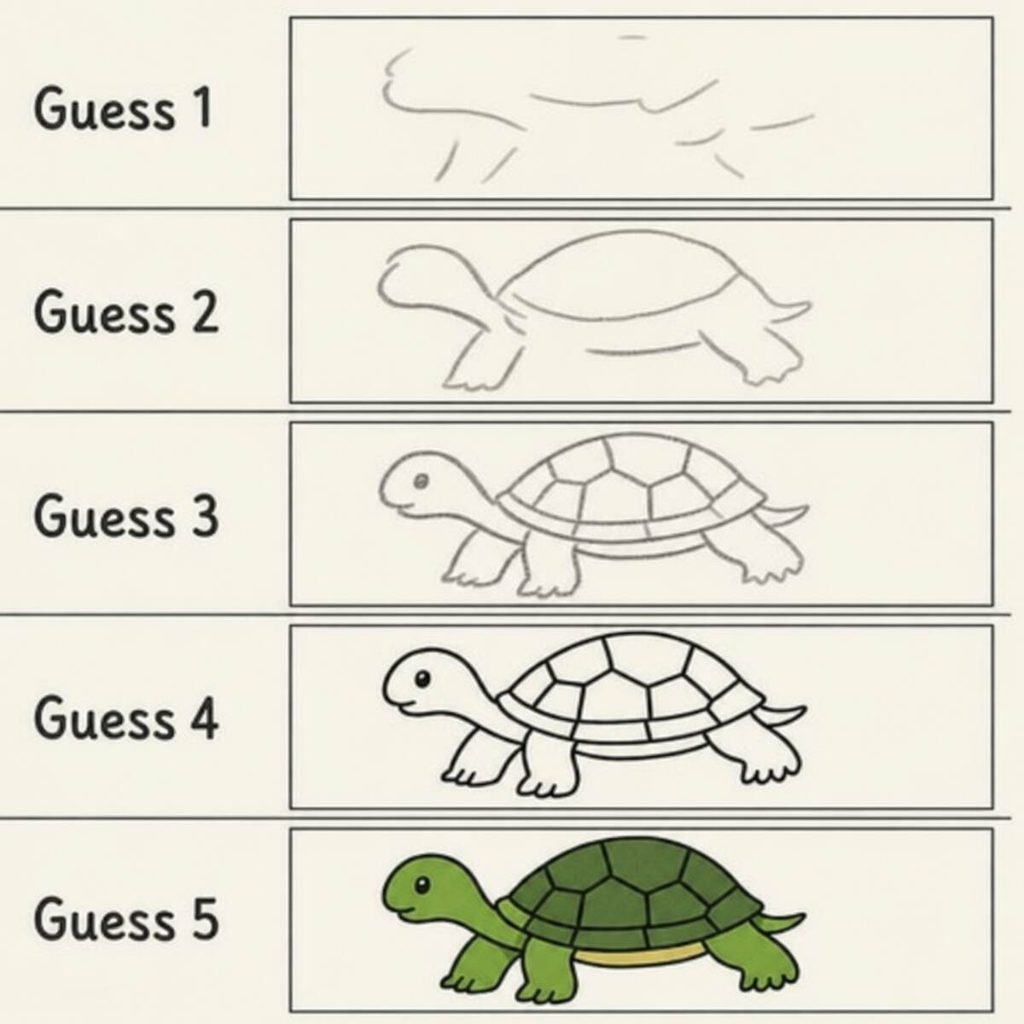
Visual formats work well because they are quick and instantly understandable. You can show a cropped screenshot, a blurred image, a color palette, a silhouette, an item icon, a map fragment, or a user interface detail. Each new clue can reveal more of the original image or add a second image from another part of the game.
Visual clues are especially effective for well-known games with recognizable art direction. A tiny health bar, menu style, environment texture, or character silhouette can trigger memory without giving away the answer immediately. The challenge is to avoid clues that are either too generic or too revealing.
If you use screenshots or other copyrighted material, be thoughtful about permissions, fair use considerations, platform rules, and how the game will be distributed. For a private event or classroom setting, the risk and expectations may differ from a public commercial website. When in doubt, use your own original art, licensed assets, or text-based clues.
Text clue formats
Text-based games are flexible and easier to produce at scale. You can create hints based on genre, mechanics, setting, developer era, platform, character roles, plot setup, or memorable gameplay loops. A text-first guessthegame can also be more accessible because screen readers can interpret the clues more easily than images.
Text clues should move from broad to specific. A first clue might describe the genre without naming unique features. Later clues can mention unusual mechanics, setting details, or iconic moments. The final clue can be close to direct, especially if players have limited guesses.
Avoid writing clues that depend on private interpretation. “This game feels lonely” might be evocative, but it may not help enough unless paired with clearer details. Strong clues are specific, verifiable, and spoiler-conscious.
Audio and music formats
Audio clues can be extremely engaging, especially for players who recognize sound effects, menu chimes, character voices, or soundtrack snippets. The downside is that audio can create rights issues and accessibility barriers. It also requires players to be in an environment where sound is convenient.
If you use audio, include volume controls, captions or alternative text hints, and a mute-friendly path. You can also avoid copyrighted clips by using descriptions like “a cheerful 8-bit overworld theme” or original sound-alike clues that capture a mood without copying protected work.
Emoji, icon, and abstract clue formats
Emoji and icon-based guessing games work well on social media because they are compact and shareable. A sequence like “space helmet, farm, laser, cat” can hint at a title, genre, or plot without requiring assets. These formats are light, playful, and easy to remix.
The risk is ambiguity. Icons can point to multiple games, especially when the clue set is short. To keep things fair, define the answer pool clearly. If players know the answer is from a list of 100 famous games, the puzzle feels more solvable than if every game ever made is possible.
Build the answer pool before designing clues
Many creators make clues first and answer lists later, but that often leads to uneven difficulty. Start with the games your project will include. This lets you control variety, avoid duplicates that feel too similar, and design clues that fit the whole experience.
Your answer pool should match your audience. A broad public game might focus on widely recognized titles. A niche fan community can handle obscure indie releases, retro imports, or difficult franchise entries. A family-friendly party game might use titles most people have heard of, even if they have not played them.
Consider organizing your pool by category:
- Difficulty level: easy, medium, hard, expert.
- Era: retro, 2000s, modern, recent.
- Platform: console, PC, mobile, handheld, arcade.
- Genre: platformer, RPG, shooter, puzzle, sports, strategy.
- Recognition type: iconic characters, famous worlds, distinctive mechanics, memorable UI.
- Content sensitivity: family-friendly, mature, spoiler-heavy, horror, violence.
This structure helps you avoid a game that accidentally swings from very easy one day to nearly impossible the next. It also makes future updates simpler because you can see which categories need more entries.
If the game will be public, include alternate titles, accepted spelling variations, subtitles, and common abbreviations where appropriate. Players do not enjoy losing because they typed “Zelda Breath of the Wild” instead of the full official title. A forgiving answer system makes the experience feel more polished.
How do you make guessing games challenging without frustrating players?
You make guessing games challenging without frustrating players by giving them useful information in a predictable rhythm. The first clue can be difficult, but every later clue should reduce uncertainty in a meaningful way. Players should feel that each failed attempt teaches them something, not that they are blindly throwing guesses at a hidden answer.
A fair difficulty curve usually starts with category-level information and ends with near-confirmation. In a visual game, this might mean starting with a cropped environmental detail, then showing a UI element, then a character, then a wider screenshot. In a text game, it might mean moving from genre to mechanic to setting to a highly recognizable clue.
A useful clue ladder might look like this:
- Broad clue: genre, mood, perspective, or general setting.
- Context clue: era, platform family, visual style, or gameplay loop.
- Distinctive clue: a mechanic, object, enemy type, interface feature, or story setup.
- Recognition clue: a memorable location, character role, phrase, or system.
- Final clue: a clue that strongly points to one title while still letting the player answer.
The trick is to make each clue narrower than the last. If clue two does not help more than clue one, it feels like filler. If clue three gives away everything, the final attempts lose value. Playtesting is the fastest way to discover where your ladder breaks.
You can also reduce frustration with smart feedback. Instead of only showing “wrong,” tell players whether their guess is in the same franchise, genre, release decade, or platform group if that fits your format. This turns wrong answers into progress and makes the game feel more interactive.
Design rules that players can trust
Players are more forgiving of hard puzzles than inconsistent ones. If yesterday’s answer required the exact subtitle and today’s accepts abbreviations, the rules feel unstable. If some clues refer to the original release and others refer to remakes without warning, players may feel tricked.
Create a short internal style guide before you publish. It does not need to be complicated, but it should cover the decisions you will face repeatedly. A style guide helps you maintain quality when you add new answers, invite contributors, or update older puzzles.
Include rules such as:
- Whether remakes, remasters, sequels, expansions, and DLC can be answers.
- Whether franchise names are accepted when the answer is a specific title.
- Whether clues may mention release year, developer, publisher, or platform.
- How you handle regional titles and translated names.
- How spoiler-heavy clues can be.
- How many guesses players get before the answer is revealed.
- What happens when two games share a very similar clue.
Consistency builds trust. When players trust the rules, they are more likely to blame their own missed connection rather than the game design. That is a much healthier emotional loop for a daily challenge or recurring activity.
Create clues that reward observation
Great clues are not random facts. They reward the kind of attention your game wants to encourage. If your guess the game concept is about screenshots, clues should reward visual memory and pattern recognition. If it is about mechanics, clues should reward understanding how games play. If it is about story, clues should reward narrative knowledge without spoiling too much.
One practical method is to write multiple clue types for every answer. For each game in your pool, list visual details, mechanical details, setting details, character details, and cultural details. Then choose the clue sequence that creates the smoothest difficulty curve.
For example, instead of immediately hinting at a famous protagonist, you might begin with a mechanic that dedicated players remember. Then you can reveal a setting detail, then a UI clue, and only later a character or title-adjacent hint. This keeps the early round satisfying for knowledgeable players while still helping casual players later.
Use these questions while writing clues:
- Can this clue apply to too many games?
- Does the clue become more useful when paired with previous clues?
- Is the clue based on something players can reasonably know?
- Does the clue avoid major spoilers unless the game is old or spoiler expectations are clear?
- Would someone who knows the answer say, “Yes, that clue is fair”?
- Would someone who does not know the answer still learn something interesting?
Clue writing improves with revision. Draft more hints than you need, then cut the weakest ones. The best clue is often not the cleverest; it is the one that moves the player forward at the right moment.
Give players a smooth game loop
The game loop is the repeated pattern players experience every round. In a simple guessthegame, the loop might be: see clue, enter guess, receive feedback, unlock next clue, guess again, then share or replay. If this loop feels smooth, players focus on the puzzle. If it feels clumsy, even good clues can lose their appeal.
A strong loop should feel immediate. The input field should be obvious. The submit action should be clear. Feedback should appear quickly. If the player unlocks a new clue, the page should guide their attention to it without forcing them to hunt.
Autocomplete can be very helpful, especially when your answer pool includes long titles. It reduces spelling frustration and prevents players from wondering whether an answer is valid. However, autocomplete can also make the game easier by revealing possible answers too quickly. You can manage this by requiring a few typed characters before suggestions appear or by limiting suggestions to likely matches.
At the end of a round, give players closure. Show the correct answer, their number of guesses, the clue sequence, and a shareable result if appropriate. You can also offer a short note about why the clues pointed to that answer. This turns the reveal into a learning moment rather than a dead end.
Make scoring simple enough to matter
Scoring can add replay value, but it should not overwhelm the core puzzle. For most guessing games, the simplest scoring system is based on how many clues or attempts the player used. Solving on the first clue is excellent, solving after several clues is still satisfying, and missing the answer gives a clear outcome.
If you want more depth, you can add streaks, daily completion, time bonuses, category badges, or difficulty ratings. Use these carefully. Too many scoring elements can make a casual game feel like homework, especially if players only wanted a quick challenge.
A practical scoring approach could include:
- Attempts used: fewer guesses create a better result.
- Clues revealed: solving earlier earns more credit.
- Streak count: consecutive completed rounds encourage return visits.
- Difficulty label: easy, normal, hard, or expert helps players interpret performance.
- Share text: a spoiler-free result lets players compare without revealing the answer.
Keep the score easy to understand at a glance. If players need to read a long explanation to know whether they did well, the system is too complex. The emotional payoff should be instant.
Use feedback to keep wrong guesses useful
Feedback is one of the biggest differences between a forgettable guessing game and a compelling one. A basic “wrong” message works, but it does not help the player learn. Better feedback gives them a nudge while preserving the challenge.
The right feedback depends on your format. If your game has a structured database, you can compare the player’s guess with the answer. For example, you might indicate whether the guessed game shares a genre, platform, franchise, release era, or perspective with the correct answer. If your game is more casual, you can reveal a hint after each wrong attempt.
Be careful not to turn feedback into accidental spoilers. If only one game in your pool has a specific platform and you reveal that platform immediately, the answer may become too easy. Feedback should reduce possibilities, not collapse the puzzle too soon.
Use tone thoughtfully, too. Friendly feedback keeps the experience light. Messages like “Not quite, but you are in the right genre” feel better than blunt failure screens. Players are more likely to continue when the game sounds like a guide rather than a judge.
Content sourcing and rights matter
If your project uses existing game images, names, logos, characters, music, or clips, you need to think carefully about rights and usage. A fan-made private challenge, a classroom activity, and a monetized public website can carry very different expectations. This article cannot replace legal advice, but it is important not to treat assets as automatically available just because they are easy to find online.
You can reduce risk by designing around original or licensed materials. Instead of using direct screenshots, you might use custom illustrations, abstract clue cards, written descriptions, genre tags, color palettes, or player-created prompts. If you do use third-party materials, keep records of where they came from and what permissions or licenses apply.
Also avoid implying official endorsement if you do not have it. If your game is inspired by a well-known format, make your branding distinct. A name like guessthegame can work as a descriptive phrase in casual writing, but your public project should have its own identity, visual style, and rules so players understand what you created.
Respecting rights is not just about avoiding problems. It also pushes you to create a more original experience. Constraints often lead to better clue design, stronger branding, and a game that stands on its own.
Design for accessibility from the beginning
Accessibility is easiest when it is built in early. A guess the game challenge that depends only on tiny visual details, fast timers, or audio clips can exclude players who would otherwise enjoy it. You do not need a complicated system to make meaningful improvements.
Start with readable text, strong contrast, large touch targets, and keyboard-friendly navigation. If you use images, provide descriptive alt text where it does not spoil the puzzle, or provide equivalent text hints. If you use color as a clue, do not make color the only clue. If you use audio, provide captions, transcripts, or alternative hints.
Accessibility can improve the experience for everyone. Clearer buttons help mobile players. Better contrast helps people in bright rooms. Flexible timers reduce stress. Text alternatives make your content easier to share, archive, and translate.
An accessibility checklist for your game might include:
- Buttons and inputs are usable on mobile screens.
- The game can be played with a keyboard.
- Text is readable without zooming.
- Color clues have non-color alternatives.
- Audio clues have captions or text equivalents.
- Timers can be paused, extended, or avoided.
- Error messages are clear and polite.
- Screen reader users can understand the game state.
The goal is not to remove challenge. The goal is to make sure the challenge comes from the puzzle, not from the interface.
How can you turn a simple guessthegame idea into something people return to?
You turn a simple guessthegame idea into something people return to by building a habit loop: a fresh challenge, a quick result, a satisfying reveal, and a reason to share or come back. Daily puzzles work because they create anticipation without demanding much time. Players know there will be something new, and they can compare results with friends without needing a long session.
A recurring format benefits from predictability. If you publish one puzzle per day, keep the release schedule steady. If you organize by weekly themes, make the theme clear. If you rotate difficulty, tell players what kind of challenge they are entering.
Replay value can also come from variety. You might include themed weeks, genre-specific rounds, retro challenges, beginner-friendly days, expert modes, or community-submitted clue sets. The key is to make variety feel intentional rather than random.
Community features can help, but they should not be required. A spoiler-free share result is often enough for early versions. Later, you might add leaderboards, private groups, custom rooms, or user-created playlists. Build the smallest version that supports repeat play, then expand when you know what players enjoy.
Make sharing spoiler-free and satisfying
Sharing is powerful for guessing games because results naturally invite comparison. People like showing that they solved a puzzle quickly, barely survived the final clue, or missed something obvious. But sharing must protect the answer, or the game loses its value for everyone else.
A good share result should communicate performance without revealing the title. It might show the number of guesses, clue count, date or puzzle number, and a simple visual pattern. If your game has categories, you can include the category only if it does not give too much away.
Keep share text short. Players should be able to post it in a message, social feed, or group chat without editing. Avoid auto-tagging too aggressively or creating promotional text that feels spammy. The player’s achievement should be the focus.
You can also encourage conversation after the reveal. Ask players what clue gave it away, which wrong guess they made first, or whether they want more games from the same genre. These prompts are simple, but they help transform a solo puzzle into a social experience.
Test with players who know different amounts
Playtesting is essential because creators are usually too close to their own clues. A clue that feels obvious to you may be meaningless to a casual player. A puzzle that seems fair to a beginner may be solved instantly by a dedicated fan.
Test with at least three types of players if possible: people who know the category well, people with moderate familiarity, and people who are nearly new to it. Watch where each group gets stuck. Ask what they thought each clue meant. Notice whether wrong guesses feel informed or random.
During testing, look for patterns:
- Players misunderstand the rules before they misunderstand the clue.
- The first clue is so vague that no one can make a reasonable guess.
- The second or third clue gives away the answer too soon.
- Accepted answers are too strict.
- Multiple answers seem equally valid.
- Players enjoy the reveal even when they lose.
- Players want to try another round immediately.
The last two points matter more than many creators realize. A difficult puzzle can still succeed if the reveal feels fair and interesting. A technically correct puzzle can fail if the player leaves annoyed.
Balance niche appeal with clear onboarding
A niche game can be excellent. In fact, a tightly focused audience often creates stronger engagement than a vague game for everyone. The challenge is to onboard new players without weakening the experience for fans.
If your game targets a specific community, say so clearly. “Guess the game from classic JRPG towns” sets expectations better than a broad title that secretly requires deep genre knowledge. Players do not mind difficulty when they understand the arena.
For broader audiences, provide categories or difficulty filters. A player who struggles with expert retro games might enjoy modern mainstream titles. Someone who knows indie games may not care about sports games. Letting players choose a lane can make the same content library serve more people.
Onboarding can be simple:
- Show one short instruction line.
- Offer an example round or sample clue.
- Display the number of guesses available.
- Make the first puzzle approachable.
- Explain scoring only after the player understands the basic loop.
Do not front-load every detail. Most players learn by playing. Give them enough to begin, then reveal extra rules only when needed.
Add personality without sacrificing clarity
Personality makes your game memorable. It might come through witty clue wording, playful feedback, themed visuals, unusual categories, or a distinctive reveal message. A friendly voice can turn a simple puzzle into a small ritual players enjoy.
The key is to keep personality in service of clarity. If your jokes make clues harder to interpret, they may hurt the game. If your visual style makes buttons difficult to read, it may frustrate players. If your feedback mocks wrong answers, some players will stop sharing.
A practical voice for a game like this is encouraging, concise, and lightly playful. For example, after a wrong guess, you might say, “Not that one, but you are circling the right era.” After a final miss, you might say, “Tough round. The answer was hiding in clue three.” This keeps the mood friendly while still respecting the challenge.
Your brand voice should be consistent across instructions, clues, errors, reveals, and sharing text. Even small messages shape how the game feels.
Plan for content maintenance
A guessing game needs ongoing care if you want it to last. New puzzles must be added, old clues may need revision, answers may need alternate spellings, and players may report issues you did not catch. Planning for maintenance early can save a lot of work later.
Keep your content organized in a format that is easy to review. Each answer should have its clues, difficulty rating, accepted variations, asset sources, notes, and spoiler warnings if needed. If multiple people contribute, assign review steps so the tone and difficulty remain consistent.
It helps to create a backlog. If you want to publish daily, do not operate one day at a time. Build several weeks of puzzles before launch so you have room to test, revise, and respond to feedback. A buffer also lets you schedule themed events or seasonal challenges without rushing.
Maintenance also includes removing or updating weak content. If one puzzle receives repeated complaints, study it. Maybe the clue was misleading. Maybe the answer was too obscure. Maybe an alternate title should have been accepted. Treat feedback as design data, not personal criticism.
Build the simplest version first
It is tempting to imagine leaderboards, accounts, animations, custom avatars, multiplayer rooms, and complex analytics before the first version exists. Those features can be useful later, but they are not the core. The core is whether people enjoy solving the puzzle.
Start with a minimum playable version. It might include one answer pool, one clue format, a fixed number of guesses, basic feedback, and a reveal screen. That is enough to test the concept. If players ask for more, you will know what to build next.
A simple first version might include:
- A small curated answer list.
- Five clues per answer.
- A forgiving text input with accepted variations.
- A clear wrong-answer message.
- A final reveal with the correct answer.
- A spoiler-free share result.
- A way for players to report a problem.
This approach keeps your energy focused. Instead of building a large system around an untested idea, you create a playable experience, learn quickly, and improve based on real behavior.
Avoid common design mistakes
Many guess the game projects struggle for the same reasons. The idea is fun, but the execution gets in the way. Knowing the common mistakes can help you avoid them before players encounter them.
One mistake is making the answer pool too broad. If every game in history is possible, clues need to be extremely specific to feel fair. A defined category makes the puzzle more satisfying because players understand the search space.
Another mistake is relying on trivia that is not central to the game. Release dates, publisher changes, obscure development facts, and regional details can be interesting, but they may not create the recognition moment players want. Use those facts carefully, usually as later clues or bonus context.
A third mistake is being too strict with answers. If players know the correct title but fail because of punctuation, subtitles, or spelling, the game feels unfair. Accept common variations wherever possible.
Watch out for these issues as well:
- Clues that depend on spoilers without warning.
- Screenshots that are too dark, tiny, cropped, or generic.
- Hints that repeat the same information in different words.
- A scoring system that punishes experimentation.
- Share results that reveal too much.
- Long instructions that delay the first play.
- Difficulty spikes caused by untested puzzles.
- Feedback that sounds harsh or dismissive.
Most of these problems are easy to fix once you see them. The challenge is noticing them before they become part of the player’s first impression.
Use analytics carefully and ethically
If your game is digital, basic analytics can help you understand how players interact with it. You might track completion rate, average guesses used, where players abandon the round, which clues lead to correct answers, and which puzzles receive reports. This information can reveal whether your difficulty curve is working.
Keep analytics focused on improving the experience. You do not need invasive tracking to learn whether a clue is too hard. Aggregate behavior is often enough. Be transparent about data collection if your project gathers user information, and avoid collecting anything you do not need.
Useful signals include:
- A puzzle most players solve on the first clue may be too easy.
- A puzzle most players miss may need clearer later clues.
- A clue that causes many immediate correct guesses may be too revealing.
- A high abandonment point may indicate confusion or interface friction.
- Frequent answer reports may indicate missing accepted variations.
Data should support judgment, not replace it. Sometimes a hard puzzle is exactly what your expert audience wants. Sometimes an easy puzzle creates a welcome break. Look for patterns over time rather than reacting dramatically to one round.
Bring in community input the right way
Community-submitted puzzles can keep your game fresh and make players feel invested. They can also create quality problems if you publish them without review. A good submission system gives contributors structure.
Ask for more than just an answer and a clue. Request difficulty level, category, alternate accepted answers, spoiler notes, and why the clue is fair. This helps you evaluate submissions quickly and keeps the final game consistent.
You can also invite community input without letting players design full rounds. Ask for theme suggestions, favorite categories, confusing clue reports, or requests for future answer pools. These lighter forms of participation are easier to manage and still make players feel heard.
When you use community ideas, credit contributors only if you have permission and a clear policy. Some players may enjoy public recognition, while others may not. Keep the process respectful and predictable.
Shape the experience for different contexts
Not every guessthegame needs to be a website. The same core idea can become a classroom activity, party game, livestream segment, newsletter feature, Discord challenge, or social media series. The context should shape the design.
For a classroom, you might focus on media literacy, genre vocabulary, or design analysis. Students could guess the game from mechanics and then discuss how those mechanics shape player behavior. In that setting, the learning conversation matters as much as the answer.
For a party, speed and laughter matter more. Use broad, recognizable titles, physical clue cards, team play, and flexible rules. Let players debate, shout guesses, and enjoy near misses.
For a social media series, visual clarity and shareability matter. Use compact clues, consistent formatting, and spoiler protection in comments. A strong recurring template helps followers recognize the challenge instantly.
For a website or app, reliability matters. Players expect fast loading, saved streaks if offered, mobile-friendly design, and clear answer handling. The more polished the platform feels, the more attention players can give to the puzzle itself.
A practical creation workflow
When you are ready to build, follow a repeatable workflow. This keeps the process organized and prevents your game from becoming a loose collection of disconnected puzzles.
Start with concept definition. Write your player promise, audience, answer scope, clue format, and round structure. Then create a small answer pool, perhaps 25 to 50 entries, depending on your available time. Do not worry about having hundreds of puzzles at the beginning.
Next, draft clues for each answer. Create more clues than you need, then arrange the best ones from hardest to easiest. Add accepted answer variations and notes about possible confusion. If two answers feel too similar, adjust the clue or remove one from the initial pool.
Then build or assemble the playable version. This might be a web prototype, a slide deck, a printable card set, or a simple form. The medium matters less than the ability to play a full round.
Finally, test, revise, and launch small. Share it with a limited group before promoting it widely. Watch how people play. Fix confusing rules. Improve weak clues. Add polish only after the core loop feels good.
A simple workflow checklist:
- Define the audience and promise.
- Choose the clue format.
- Build a focused answer pool.
- Write a style guide for answers and clues.
- Draft multiple clues per answer.
- Arrange clues by difficulty.
- Add accepted spelling and title variations.
- Create the playable loop.
- Test with different knowledge levels.
- Revise based on observed confusion.
- Launch with a manageable schedule.
- Keep a backlog for future updates.
This workflow is intentionally practical. It helps you make progress without needing a large team or perfect system.
Keep improving after launch
Launch is not the end of design; it is the beginning of real learning. Once players interact with your game, you will see which assumptions were right and which need adjustment. Some clues will work better than expected. Others will confuse people in ways you did not anticipate.
Create a simple feedback channel. It could be a form, email address, comment thread, or community post. Ask players to report missing accepted answers, misleading clues, technical problems, and puzzle ideas. Keep the process easy, because players are more likely to help when it takes only a moment.
Review feedback regularly, but do not let every comment pull the game in a different direction. Your style guide and player promise should remain your anchor. If feedback supports that promise, act on it. If it points toward a different game entirely, save the idea for a future mode rather than diluting the current one.
Improvement can also mean subtraction. Remove confusing features. Simplify scoring. Cut weak categories. Replace clues that do not support the experience. A cleaner game is often more memorable than a larger one.
Final takeaways for creating your own guessing game
Creating your own guessthegame is a rewarding design challenge because the concept is easy to understand but rich with creative decisions. The best versions combine clear rules, fair clue progression, forgiving answer handling, and a tone that makes players want one more round. If you keep the player’s experience at the center, your game can feel polished even with a simple format.
Start small, test early, and improve deliberately. Choose an answer pool your audience can understand, write clues that narrow the possibilities, and make every wrong guess feel like part of the journey. With thoughtful design, your guess the game project can become more than a quick puzzle; it can become a repeatable, shareable experience players look forward to.